Zombie Roguebie: Survivor Game
- 4.6
- Rating
- 10.00K
- Installs
- Free
- Price

 Analysis by App-foxy
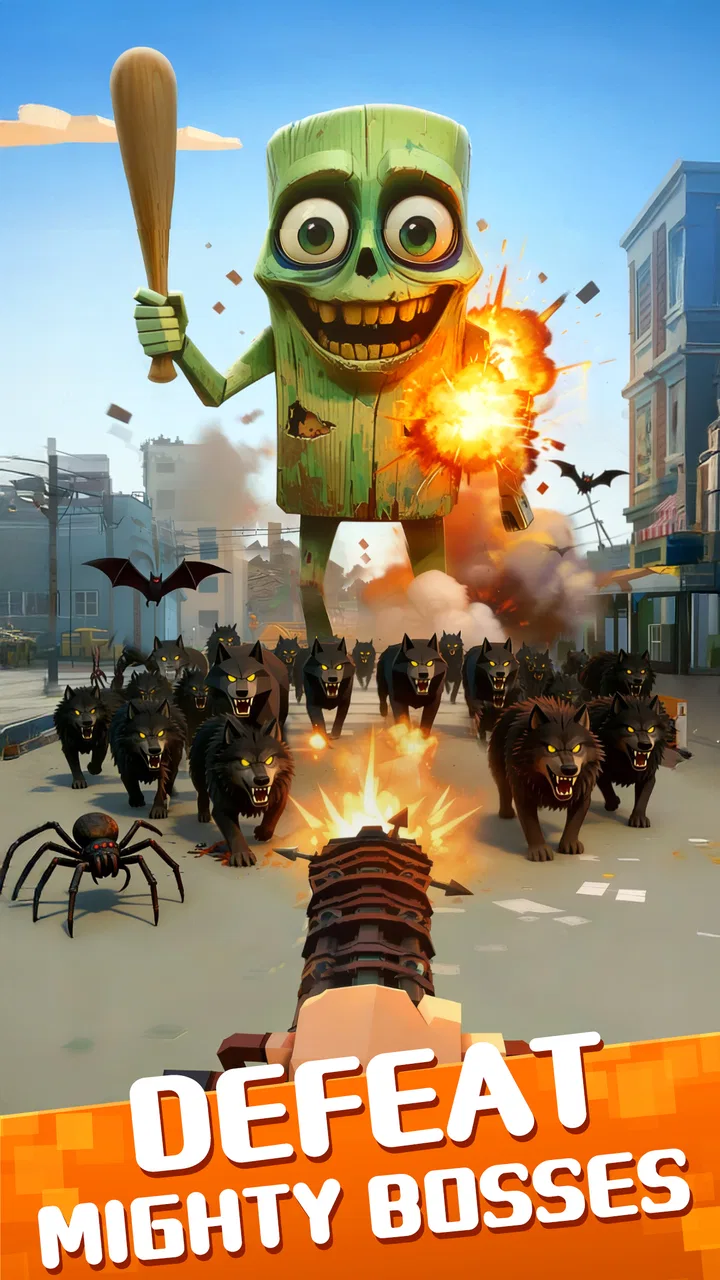
I went into Zombie Roguebie: Survivor Game expecting a quick zombie-themed adventure, but its appeal is more specific than that. It presents itself as a free Android game from Metajoy, built around a blend of shooting, defence, and survival. That combination gives the first sessions a useful sense of variety: I am not only trying to defeat enemies, but also thinking about how to stay alive when the pressure rises. The game is rated for Everyone 10+, which makes its tone easier to approach than a more graphic zombie title, although younger players may still need guidance around optional purchases.
What matters to me with a game like this is not whether the opening session is exciting. Most roguelike games can create that spark. The more important question is whether the loop remains enjoyable once the surprise has gone. After spending time with this one, I see a clear audience for it: players who like short, repeatable survival runs and enjoy adapting to changing danger. I am less convinced it will satisfy someone looking for a deep story, a large world to explore, or a slow, carefully paced adventure.
Why the first week feels inviting
The strongest part of the early experience is the way the three central ideas support one another. Shooting gives each encounter an immediate action, defence adds a reason to think about positioning and protection, and survival supplies the pressure that keeps a run from feeling completely routine. That structure is more appealing than a basic wave shooter because I am constantly weighing the next move instead of simply holding an attack button.
You May Also Like

 Pandora - Music & Podcasts
Pandora’s Music Is Easy to Start, but Harder to Recover
Pandora’s strength is its low-effort path from a seed to a station. Its weak spot is how much confidence it asks you to place in connection, setup, and quiet recovery.

 AccuWeather: Weather Radar
AccuWeather Review: A Quick, Clear Forecast for Everyday Decisions
For everyday plans, the best forecast is the one you can understand quickly. AccuWeather makes rain timing, radar, and local conditions easy to act on, with a few trade-offs.

 Hill Climb Racing
Why Hill Climb Racing Still Turns Crashes Into One More Run
A tiny car, a bumpy hill and one more upgrade: Hill Climb Racing keeps resurfacing because its simple chaos makes every near-miss feel personal.

 AliExpress - Shopping App
AliExpress Makes Global Shopping Feel Personal, but Shoppers Bear the Risk
AliExpress turns a global marketplace into a pocket-sized discovery engine. Its reach is useful, its shopping loop compelling, and its trade-offs easy to miss.

 Lords Mobile: Kingdom Wars
Lords Mobile Is a Kingdom-Building Routine, Not a Quick Match
A case-by-case verdict on the building, battles, device demands, and social commitments that make Lords Mobile rewarding for some players and exhausting for others.

 PDF Scanner app - TapScanner
TapScanner Makes Paperwork Easier to Capture, Check, and Share
TapScanner makes scanning with a phone feel less like a rescue operation and more like a dependable step in getting work done. Its capture tools are useful, though not flawless.
More From Our News Desk
View All News


During a typical session, I can imagine opening the game for a short break, completing a run, and stopping before the experience becomes too demanding. That makes it a good fit for a commute, a waiting room, or a few minutes after work. The format does not require me to commit to a long narrative chapter before I feel that I have played something meaningful. A failed attempt can still feel useful if it teaches me which threats deserve attention and when a defensive choice is safer than chasing another target.
The roguelike structure also helps the first week feel less predictable. Repeated attempts are not only about improving reflexes; they encourage experimentation. I may approach one run aggressively, then become more cautious in the next after discovering that survival depends on managing pressure rather than defeating every danger immediately. That kind of adjustment is where the game has more personality than its short store description suggests.
Still, the early appeal depends heavily on whether I enjoy repetition. The game does not appear designed to be a traditional cinematic adventure with a carefully unfolding plot. Its reward comes from the run itself: making decisions, reacting to threats, and trying again. If I usually play games for character development or exploration, the zombie setting and survival loop may not be enough to hold my attention for long.
What makes the combat loop work
I find the combination of shooting and defence more interesting than either idea would be alone. Shooting creates a direct, satisfying response to danger, while defence asks me to think beyond the enemy currently in front of me. The useful habit is to avoid treating every encounter as a race to eliminate targets. Sometimes the better choice is to preserve space, protect a safer position, and wait for a clearer opening.
That is also the first non-obvious lesson I would give a new player: survival decisions are often more valuable than flashy attacks. In a game built around repeated runs, a small mistake early can create problems later. I would use the opening moments of each attempt to learn the rhythm of the danger rather than immediately spending every available option. This approach makes the game feel less chaotic and gives the defensive side a real purpose.
Another useful habit is to judge a run by the quality of the decisions, not only by how far it goes. Roguelike games can make failure feel wasteful when the player sees only a final defeat. Here, I would treat each attempt as a test: which threat forced me into a bad position, which response bought time, and which aggressive move created unnecessary risk? That mindset helps the game remain engaging during the first week, especially for players who enjoy gradual improvement.
Who will enjoy the opening sessions
This game is a natural match for someone who likes zombie themes but does not want a long, complicated role-playing game. It should also appeal to players who enjoy repeating short challenges and making quick choices under pressure. The free entry point is helpful for trying the core loop without first committing money, while the Everyone 10+ rating makes it more approachable for families who are comfortable with light zombie action.
I would be more cautious recommending it to a player who wants a relaxing experience. Survival games can be mentally tiring even when their controls are simple, because every run asks for attention. It is also not the best choice for someone who dislikes failing and restarting. The roguelike format naturally makes repetition part of the design, so frustration can build if the player expects steady progress after every attempt.
The game has reached over ten thousand installs and holds a 4.5 average from a few hundred ratings, with dozens of written reviews. Those figures suggest that it has found an audience, but they do not replace personal testing. A player who enjoys the specific mix of action and survival may find the game immediately appealing, while someone who wants a richer adventure may still move on despite the positive reception.
Whether it keeps its place after the novelty fades
The month-to-month question is harder. A game can be entertaining during its first week because every mechanic feels new, then become a repetitive obligation once the player understands the basic rhythm. Zombie Roguebie: Survivor Game has a reasonable foundation for lasting value because its roguelike format encourages different approaches. The key is whether those choices continue to feel meaningful rather than becoming a fixed routine.
For me, the best long-term use is not daily grinding. I would keep it installed as a compact action game for occasional sessions, returning when I want a quick challenge rather than treating it as a permanent main game. That distinction matters. The title can earn space on my phone without becoming part of my everyday schedule. Its value comes from being readily available when I want a survival run, not from demanding constant attention.
The current version is 1.13.0, and the game was released on February 12, 2026. Those details give the title a relatively recent starting point, but they do not guarantee that every future session will feel fresh. Long-term enjoyment will depend on how well the existing structure supports experimentation and how comfortably the game fits into my routine. I would judge updates by whether they improve variety and balance, not merely by whether they add more reasons to return.
A practical way to preserve interest is to set a personal rule for play. I might complete a small number of runs, stop after a particularly strong attempt, and return another day instead of continuing until the loop feels exhausting. This is especially useful for free games with optional purchases, because it prevents the game from turning into an automatic habit. Short, deliberate sessions protect the fun better than endless repetition.
The game is free to download, but optional in-app items range from $0.99 to $99.99 each. That wide span is important when deciding whether the game deserves a lasting place. I would begin without buying anything and first determine whether the core shooting, defence, and survival cycle remains enjoyable on its own. If progress starts to feel uncomfortable without spending, the long-term value becomes much weaker, even if the opening is entertaining.
How it compares with familiar alternatives
Compared with a straightforward zombie shooter, this game offers more decision-making because survival and defence sit beside the shooting. A pure shooter may be better for someone who wants immediate action with minimal planning. In contrast, this title is more suitable when I want the pressure of deciding whether to attack, reposition, or protect myself.
Compared with a large adventure game, it is much easier to pick up but less likely to provide a memorable world or story. A story-driven alternative would be the better choice for a player who wants exploration, dialogue, and a sense of destination. Zombie Roguebie: Survivor Game earns its place through repeatable challenge rather than narrative depth.
It also occupies a middle ground between a defence game and a survival game. A dedicated defence title may offer more deliberate planning around fixed positions, while a dedicated survival game may emphasize resource management or a broader sense of discovery. This game’s appeal is the overlap: enough defence to make positioning matter, enough shooting to keep the hands busy, and enough survival pressure to make mistakes meaningful.
That middle ground is both its strength and its limitation. I appreciate the variety because it prevents the game from feeling like only one narrow activity. At the same time, players who want one system explored in great depth may find the design less satisfying than a specialist alternative. I would choose this game for balance and accessibility, not for the deepest version of any single genre element.
The maintenance burden of keeping it installed
The maintenance burden seems modest if I treat the game as an occasional pick-up-and-play option. Its compact run-based identity means I do not need to remember a complicated storyline or rebuild a large strategy every time I return. That is a real advantage for mobile gaming. I can leave it alone for a while and come back when I want action without feeling that I have forgotten an entire campaign.
However, the same simplicity can become a weakness if I need a stronger reason to return. A long-term game usually benefits from meaningful goals, changing challenges, or a progression system that feels worth revisiting. I would pay close attention to whether my decisions continue to change the outcome or whether I eventually repeat one reliable method. Once a single approach dominates, the maintenance burden becomes psychological: I must create my own reasons to continue.
My preferred routine would be to play when I have a clear window of time, avoid chasing every optional objective, and stop when the game begins to feel like a chore. I would also keep an eye on purchase prompts and decide in advance whether I am willing to spend. This is not a criticism unique to this title; it is simply sensible for any free mobile game with optional items. A game should remain a choice, not something that quietly dictates the shape of my break.
Device compatibility is another practical point. The minimum operating system is Android 7.0, so the game is positioned to work with a broad range of Android devices. Even so, I would not assume that every older phone will deliver the same comfort during busy action. Screen responsiveness, battery condition, and available storage can affect how enjoyable a fast survival game feels, so players using aging hardware should judge the experience by actual play rather than by the operating-system requirement alone.
Where fatigue is most likely to appear
The first source of fatigue is repetition without a fresh decision. If each run starts to follow the same sequence, the roguelike label stops feeling like an invitation to experiment and starts feeling like a reset button. I would notice this quickly if I could predict the safest response to every situation. The game works best when it makes me reconsider my plan, not when it rewards one memorized pattern forever.
The second is the emotional swing between a promising run and an abrupt defeat. That tension is part of survival design, but it can become irritating when a setback feels caused by pressure rather than a meaningful mistake. My solution would be to play with a learning goal, such as testing a defensive approach, instead of measuring every session only by victory. That reframes failure as useful information and reduces the urge to keep playing while frustrated.
The third is purchase pressure. The free model makes the initial decision easy, but the presence of items priced from $0.99 up to $99.99 means I would not recommend playing casually with unrestricted spending available. Parents should discuss purchases with younger players, even though the content rating is Everyone 10+. Adults should also decide whether optional spending improves enjoyment or merely shortens the challenge that made the game interesting in the first place.
Finally, the blended design may fatigue players who prefer a very clear identity. Shooting, defence, and survival work together, but they also compete for attention. Someone looking for a pure action game may feel slowed by defensive thinking, while a strategy-minded player may want more time to plan. I see this as a trade-off rather than a flaw: the mixture broadens the game’s appeal, but it may prevent the experience from becoming a perfect fit for specialists.
My long-term recommendation
I recommend Zombie Roguebie: Survivor Game as a free trial for Android players who enjoy compact roguelike challenges and zombie action. I especially like it as a secondary game: something I can open for a focused session, make a few tactical choices, and put down without losing the thread of a larger campaign. Its three-part loop gives it more substance than a basic shooting game, and the defensive angle rewards patience rather than constant aggression.
I would not recommend it as the only game for someone who needs a deep story, extensive exploration, or a constantly expanding sense of discovery. I would also skip it if repeated runs and occasional frustration usually make me abandon mobile games. The title’s lasting value depends on accepting its format from the beginning. It is not trying to replace a full adventure; it is offering a repeatable survival challenge that fits into smaller spaces of the day.
After the novelty fades, I think it earns a limited but legitimate place on my phone. I would keep it installed for occasional zombie runs, not make it a compulsory daily habit, and avoid spending until the free experience proves that it deserves more commitment. Its lasting strength is the balance between immediate shooting and thoughtful survival, while its lasting weakness is the risk that repetition will outlive the decisions. For the right player, that balance is enough to return regularly. For everyone else, a more focused shooter or a richer adventure will probably be the better long-term choice.
FAQs for Zombie Roguebie: Survivor Game
01What is the main objective of Zombie Roguebie: Survivor Game?
In Zombie Roguebie: Survivor Game, your primary objective is to survive in a post-apocalyptic world overrun by zombies. You must gather resources, build shelters, and fend off waves of undead while completing various missions. Strategic planning and quick reflexes are essential to ensure your survival and progress through the game.
02Is Zombie Roguebie: Survivor Game free to play?
Yes, Zombie Roguebie: Survivor Game is free to download and play. However, it offers in-app purchases that enhance the gaming experience. These purchases can include special items, weapons, or in-game currency. Players can still enjoy the game fully without spending money, but the additional purchases can provide a competitive edge.
03What are the system requirements for Zombie Roguebie: Survivor Game on mobile devices?
Zombie Roguebie: Survivor Game requires Android devices running version 5.0 or higher and iOS devices with iOS 11.0 or later. It's optimized for both smartphones and tablets. Ensure you have adequate storage space and a stable internet connection for the best gaming experience. Regular updates may also be necessary to access new features and improvements.
04Does Zombie Roguebie: Survivor Game offer multiplayer options?
Yes, Zombie Roguebie: Survivor Game features a multiplayer mode where you can team up with friends or other players online. This mode allows for cooperative gameplay, where players can strategize together to survive longer and take on more challenging zombie hordes. Communication and teamwork are key to succeeding in multiplayer missions.
05Are there any parental controls in Zombie Roguebie: Survivor Game?
Zombie Roguebie: Survivor Game includes parental control settings to ensure a safer environment for younger players. Parents can restrict in-app purchases and limit online interactions. The game features some intense and potentially frightening content, so it's recommended for players aged 13 and above. Parents are encouraged to review the game settings to suit their preferences.
Pros
- Engaging gameplay with strategic depth.
- Varied environments keep it fresh.
- Smooth controls enhance experience.
- Regular updates with new challenges.
- Offline mode available for travel.
Cons
- Ads can interrupt gameplay frequently.
- In-app purchases can be pricey.
- Limited character customization options.
- Some levels feel repetitive.
- Requires significant storage space.

Zombie Roguebie: Survivor Game
Gallery